Tuesday, May 17, 2011

T-Mobile Launches Bobsled by T-Mobile — A New Communications Brand to Bridge the Traditional Telco and IP Worlds


T-Mobile today introduced Bobsled by T-Mobile, a new brand aimed at bridging traditional telecommunications and Internet-based voice and data services to enable people to stay connected in a simple and cost-effective way. The first product available under the new Bobsled by T-Mobile brand is the Bobsled application for Facebook, which provides Facebook’s more than 500 million users worldwide with free, one-touch calling to their Facebook friends from a personal computer and through the social platform’s chat window.

In addition to making live voice calls across the globe, users will also be able to send voice messages to their friends either privately or via their “walls.” The Bobsled application for Facebook is available today as a free download for all Facebook users and is not exclusive to T-Mobile customers. This captures a unique opportunity for the brand, as a recent survey found that 88 percent of Facebook users surveyed want voice chat capabilities within the site.

“T-Mobile’s focus is to innovate to provide simple and affordable communications for customers, enabling people to stay connected wherever they are,” said Brad Duea, senior vice president, T-Mobile USA. “Bobsled by T-Mobile takes our communications services innovation to a whole new dimension, bringing simple and cost-effective connections to more than half a billion people overnight, allowing people on Facebook to more easily connect and giving voice to social networking. Our new Bobsled brand will evolve in the coming months to provide even more ways for people to connect, no matter what platform, device or mobile provider they are using.”

Once downloaded, customers can use the Bobsled application for Facebook to place voice calls to their friends through Facebook Chat with just one click. This is one of the first voice over Internet protocol (VoIP) applications seamlessly integrated into Facebook Chat, which makes it quick and simple to place an impromptu call to a Facebook friend. The application eliminates the need for dialing — users simply click on a friend’s name to start the conversation. There’s also no need to remember screen names or to input numbers. With the new application, customers also can leave a voice message for friends when they’re not available. Anyone on Facebook can receive a call; no application download is required to receive a call via the Bobsled application for Facebook.

As the way people communicate transcends networks and devices, Bobsled by T-Mobile positions T-Mobile as a provider of cloud-based communications services over the Internet. In addition to providing Facebook users with one-touch calling, Bobsled by T-Mobile also powers the Group Text™ and Cloud Text™ applications on the new T-Mobile® Sidekick® 4G. Bobsled Group Text lets customers create, name, manage and participate in reply-all group text conversations, enabling them to lead their network in conversation and social planning. Bobsled Cloud Text provides the option to text with friends or groups across platforms, whether from the comfort of their PC’s large screen and keyboard, or from their new Sidekick 4G.

In the near future, T-Mobile plans to evolve Bobsled by T-Mobile to include video chat, to create the ability to place VoIP calls to mobile and landline U.S. numbers and to offer applications on smartphones and tablets across various mobile platforms, regardless of the carrier that powers such devices.

The Facebook application for Bobsled by T-Mobile is powered by Vivox, Inc., the No. 1 integrated voice platform for the Social Web, offering high quality, best-in-class voice capabilities for clear and crisp calls.

Internet Amazon sacrificing profit for growth drive

Internet Amazon sacrificing profit for growth drive

The world’s largest online retailer Amazon is investing billions and take this into account, to annoy the stock market with falling profits. In the first quarter of the U.S. company still earned $ 201,000,000 – a third less than in the previous year.

At the same time, sales soared by 38 percent to 9.9 billion dollars (6.8 billion euros) is high, such as Amazon announced after U.S. market close on Tuesday.

Amazon attracts customers with low prices and innovative offers. In addition, the dealer puts a lot of money into advertising, into new product areas, the expansion of its logistics centers and the business with cloud computing, providing data and software from the net. In this business, Amazon is a leading player.

Amazon has grown up with books and CDs, and now sells almost everything from televisions to man’s suit. The Group also operates Web hosting, offers movies in the online rentals and sells apps for booming Android smartphones. Amazon recently launched in the U.S. also has a cloud-music service. When he could come to Germany, leaving open Germany boss Ralf Kleber.

"We were never enthusiastic about the long-term opportunities," said founder and CEO Jeff Bezos and company tried to win in the investor for its growth. The post-trade share declined slightly.

Even Germany boss adhesive defended the level of investment. Now is the right time for that, also in view of the competition. Amazon in Germany open two new dispatch warehouse and a warehouse previously occupied temporarily operate continuously. "We create thousands of jobs in Germany," said Kleber.

The high costs are also introducing new product groups necessary: "For with the launch begins work on first." Among other things, would have won brands and collection will be collected. Amazon is building this country, among other things his business with fashion and footwear, and consumer goods. With the launch of the German E-book publication in recent days, glue was satisfied. "The Kindle readers have made it debuted at # 1 in the electronics category – and that’s saying something with our offering in the area."

Bezos wants to continue to invest heavily in new products and services. In the current second quarter is expected to present image repeat so. The CEO predicted a sharp rise in sales and falling profits. In previous quarters, had the Spendierhosen Bezos, and so angry shareholders.

Amazon must be careful – the online marketplace eBay is sitting the market leader in the neck. Both companies have now built a small empire. Amazon to include not only the shoe seller Zappos.com and the baby products specialist diapers.com and the online drugstore soap.com. Ebay had the German online-shopping club brands4friends taken and, with his daughter to Paypal and pay services on the web. Even Amazon does not exclude, at some point in financial services to get in, but currently there are no concrete plans, "said Kleber.

In the important Christmas trading Ebay grew considerably slower, but it deserved more. Ebay wanted to present the results for the first quarter late Wednesday evening.

T-Mobile USA Supports Customers Affected By Southern Storms


In the wake of the storms that devastated the southern United States this week, T-Mobile USA has announced efforts to keep customers connected to loved ones, as well as provide relief to those directly impacted by the disaster.

Despite wide-spread power outages affecting more than one million people, T-Mobile voice and data services remain available for customers in the affected areas. “As soon as the storms had left the area, T-Mobile engineers and technicians were onsite to restore crucial communications for our customers,” said Brian Jones, vice president and general manager at T-Mobile USA. “We are working in conjunction with local power companies as well as the Tennessee Valley Authority during the power restoration process. In the meantime, we have deployed generators across the region to ensure our customers are served during this crisis.”

Although the T-Mobile network is up and running, the company continues to take precautionary efforts to safeguard the network. Since commercial power outages have been widespread, T-Mobile has backup generators and additional fuel in place and ready to continue powering the network, if needed. The company’s critical network operations centers have backup and redundancy plans in place and rapid response engineering teams are focused on keeping service up and running for T-Mobile customers.

T-Mobile does not charge for text messages sent to mobile giving campaigns

T-Mobile customers who are interested in helping can text “REDCROSS” to “90999”. Please follow their instructions so that your donation of $10 will be given to the American Red Cross to help with relief efforts. Your donation will be charged to your T-Mobile phone bill, and one hundred percent of this donation goes directly to the Red Cross. T-Mobile does not charge for text messages sent to mobile giving campaigns and customers who do not have a messaging plan will not be charged, nor will the text messages be deducted from messaging plans.

“During this difficult time, we remain committed to working with our customers directly impacted by this disaster,” said Jones. “Our T-Mobile customers have a long history of giving during times of crisis. Working with our partners at the American Red Cross, we have made it even easier to give.”

Samsung Galaxy Tab 10.1 Limited Edition Review


The second generation of Samsung's Galaxy Tab has been longer in the making than the company anticipated. Reportedly, after the launch of Apple's iPad 2, Samsung felt that the planned (and already shown-off) Tab 10.1 was "inadequate." Now they've revamped the Tab's design to make it thinner, lighter, and more of a direct contender to the iPad, not to mention every other Honeycomb tablets on the market. However, design alone does not a great tablet make. Read on to see how the Tab 10.1 stacks up against Apple's tablet and the rest of the Android field.

Editors' Note: The Galaxy Tab we tested was a special limited edition given to attendees of Google's I/O conference. The general consumer version will have a different back, slightly different hardware, and will come with Samsung's TouchWiz interface and an updated versions of Samsung Apps. When that version is available, we'll post another full review.


IPhone 4S Coming to Sprint, T-Mobile, Rumor Says


Months after breaking exclusivity with AT&T, rumor has it the new Apple iPhone 4S will be available on all four of the largest wireless carriers in the U.S.

The newest iPhone is expected in September and will expand from being available on AT&T and Verizon to being available on Sprint and T-Mobile as well, according to a research note from Jefferies & Co. analyst Peter Misek. The note adds China Mobile will possibly be added as a fifth carrier within a year.

If it's true, having the latest iPhone available on AT&T, Verizon, Sprint and T-Mobile will inevitably help sell more phones and up to competition with Android models.

Android phones are available on the "Big Four," too, meaning for the first time wireless users wouldn't have to switch carriers to make the choice between buying an iPhone or buying an Android model.

This may be just the help Apple needs to win in the battle against Google's increasingly popular line of smartphones. Android first surpassed the iPhone in sales last year, when the iPhone was only available on AT&T, a carrier many were ready to abandon because of poor call service.

Bringing the iPhone to Verizon gave Apple record first-day sales when pre-orders for existing Verizon customers began February 4. The iPhone 4 sold out in two hours that day, proving existing Verizon subscribers wanted to get their hands on the coveted phone, even when they had access to the Droid.

Gaining T-Mobile and Sprint may help iPhone sales the way Verizon did and it makes sense to include both since AT&T has agreed to acquire T-Mobile and this would set the tone for a scorned AT&T to keep the iPhone after the merger.

But sales may not flourish as much with T-Mobile and Sprint, as those carriers together only made up about 24 percent of the U.S. mobile market, as of December, less than AT&T, at 26.6 percent, or Verizon, at 31.3 percent.


Google News Goes Mobile


Google's "News Near You" function for mobile browsers promises location-targeted news that could both nurture and challenge local news publishers.

Android and iPhone users are now given the option of sharing their location when visiting the mobile Google News page, which provides news stories that are relevant to wherever they are. Location-based filtering has long been available on the desktop version of Google News, but not the mobile site.

The service goes beyond simply linking to stories from local outlets, instead including articles about the reader's location that may come from media sources far away.

"We do local news a bit differently, analyzing every word in every story to understand what location the news is about and where the source is located," said the company in a blog post.

With a minor tweak to its mobile portal, Google has jumped easily into the hyper-local news market. It could piggyback on other efforts to address demand for local information like AOL's Patch by providing links to that content.


This could prove to be a symbiotic relationship: a lot of potential readers who know about Google News but have never heard of Patch, for example, could discover the hyper-local news service through Google. The new feature could also bring fresh readers accustomed to national news back to local newspapers.

But content producers have always had an uneasy relationship with Google News, which some see as simply scraping headlines and story summaries for its own gain. Yes, some readers click through to the original story, but others just skim the Google News front page. And when readers do click through, they may not form a connection with the source site.

The next time the reader wants news, they are likely to return to Google News rather than the content provider's site.

Of course, sharing location is required for the new function to work, and the recent controversies surrounding mobile location data may leave potential users thinking twice about opting in.

Technology Improving African Lives


Mobile phones and social media are greatly improving Africa's struggle for human rights, according to Amnesty International.

Amnesty International secretary general Salil Shetty said that Africa's springtime revolutions, which have continued to oppose entrenched and oppressive dictators, demonstrate the grassroots power of technology.

Free-flowing information on the Internet and mobile phones, he says, are becoming vital in changing the lives of Africans, even those in heavily restricted countries.

As an example, Shetty notes WikiLeaks' effect on the Tunisian revolutions. WikiLeaks published secret government documents that acknowledge Tunisian torture of detainees. Such information led to revolt against President Ben 'Ali in December.

"Support for activists from outside the country may have been strengthened as people scrutinized the WikiLeaks documents on Tunisia and understood the roots of the anger," Shetty said. Tunisia erupted into turmoil against its dictator President Ben 'Ali, throwing him out after 23 years of rule.


Other African countries have experienced similar transformations as a result of technology. After Iran's live Twitter feeds on its controversial elections in 2009, Egypt used Facebook to organize its citizens against ex-President Hosnai Mubarak.

News of Egypt and Tunisia's success spread via phones and the Web to Libya, where a besieged government is now restricting Internet and mobile phone control. This clampdown prompted activist organizations to create the "Free Libyana" mobile network, opening up airwaves for those in the country to talk freely with each other.

Rebels even used Skype chat to communicate with U.S. university students recently, spreading their message to the outside world as well.

African governments are worried and unplugging digital communications to prevent organization of protestors. Turkish authorities are planning to black out the Internet, leading to activists taking to the streets to protest the move.

Censorship may slow down what may only be inevitable, however. As Shetty says, this year "repressive governments faced the real possibility that their days were numbered."

But Shetty also warns people not to rely solely on technology to bring down dictatorships or create peaceful governments.

"There is nothing magical or deterministic about the Internet and other communications technologies. Technology neither respects nor undermines human rights," Shetty said. "It is and will continue to be a tool used by both those who want to challenge injustices around the world and those who want to control access to information and suppress dissenting voices."

Sony Finally Back Online


Sony's PlayStation Network is finally back online, after a massive security breach forced the company to shut down in an increasingly embarrassing and costly debacle.

U.S. subscribers can now access the PlayStation Network as well as Qriocity music streaming services, although restoration may be slow for certain areas and customers can't yet use the PlayStation Store to purchase online games. Users will need to download a software update and change their passwords before resuming an online connection.

The Americas, the Middle East, Australia and New Zealand are now online, but Asian countries like Japan and Korea will have to wait until their governments approve Sony's heightened security measures. Sony estimates it will achieve complete restoration worldwide within a month.

Sony's second-in-command Kazuo Hirai once again apologized profusely to angry customers on Saturday night, adding, "We are taking aggressive action at all levels to address the concerns that were raised by this incident, and are making consumer data protection a full-time, company wide commitment."

This renewed commitment to security comes after hackers broke into Sony's network from April 16 to 19 and stole around 100 million users' personal information. Major credit card companies have not yet seen unusual activity, though nearly 23,400 credit and debit card numbers were lifted.

Sony has blamed hacktivist group "Anonymous" for the attacks. While the hacker group did aim a number of "denial of service" attacks at the company, they deny tampering with credit card information. Sony says their April 16-17 attacks distracted the company from handling the much more severe break-in one day later.

Sony won't recover from this blow anytime soon, especially considering their inept handling of an already-embarrassing data breach. The company knew of the breach starting April 19 but did not tell the public until six days later, prompting lawsuits from disgruntled consumers and demands for explanations from government officials around the world.

This silence has done nothing to bolster consumer trust in the besieged company, whose allegedly weak security systems put millions of customers at risk for credit card fraud and identity theft.

Sony will have a long way to climb before it emerges from this hole. Since the network shutdown, its shares have dropped nine percent, though they rose slightly today as the company clawed its way back to functionality.

After its delayed response, the gaming giant has made a series of "peace offerings," like free games, as well as credit card monitoring and identity-theft protection up to $1 million for affected U.S. customers. Whether these efforts are enough to regain trust among customers after such a high-profile breach, however, remains to be seen.


Microsoft Attempts Comeback With "Mango" Software

Microsoft announced its "Mango" Windows Phone 7 update will contain many new business features, as the software giant tries to catapult itself back into relevance in the smartphone market.

At its TechEd 2011 conference today, Microsoft said the Mango update will include cloud-connectivity via Windows Live SkyDrive, as well as integration with its Lync unified communications product.

Users will be able to save documents on Office 365 in addition to taking advantage of pinnable e-mail folders and improved data encryption. Mango will also allow business people to see e-mails in conversation view, plus search old messages on back-end servers.

This hefty dose of updates is Windows' attempt to catch up in the smartphone market, especially on the business end, where it once flourished before BlackBerry and others came along. Microsoft's Windows Mobile enjoyed brief popularity with its 2002 release, but according to analytics firm ComScore, the company now owns only 7.5 percent market share in the smartphone business.

The picture still looks bleak for Microsoft, with the Android platform now dominating the U.S. smartphone market, the once ubiquitous RIM steadily sliding second place, and Apple's iOS in a gaining third. Microsoft's Windows Phone 7 and its fledgling app store have not exactly rocked the market, as many see the design of both as a pale reflection of Apple's streamlined iPhones and App Store.

But there is good news, too. Even the thinnest BlackBerry yet has failed to produce an enthusiastic consumer response, not to mention the PlayBook's lukewarm reception. Microsoft's new Windows 7 Phone, though it received similarly uninterested reviews, could scoop RIM's dropping customers with its new business-oriented Mango updates and that me the target its gunning for.

Also, Microsoft is set to install its Windows OS on Nokia phones within a year. Nokia, still the world's largest handset maker by volume, has seen profits decline ever since failing -- like Microsoft -- to recognize the importance of app-centric, touch screen phones. But though individually neither is doing terribly well at the moment, a partnership between Nokia and the Redmond-based company may put a large dent in the smartphone market.


Sony Ericsson Xperia Play game sales disappoint

New figures suggest that PlayStation certified games on Android are not selling at quite the rate most expected.

Currently it is only the Sony Ericsson Xperia Play that can access PlayStation certified games, which does limit how many can be sold, but a month after launch and some of the titles are selling in their hundreds or very low thousands.

PlayStation Lifestyle has published sales figures for a variety of the games available in the store and they are as follows:

  • Cool Boarders 2: 100-500
  • Destruction Derby: 500-1,000
  • Jumping Flash: 50-100
  • MediEvil: 100-500
  • Syphon Filter: 100-500

Revolutionary device

All of these games are available through the Android Market, where the number of installs are shown, and they all have a price tag of £3.99 – which is quite pricey for Android.

Sony Ericsson is putting a brave face on the sales, saying that there are no concerns about the low numbers at the moment.

"There's no concerns, it's a revolutionary device, it's shaking up the market, we're very pleased with it," said Dominic Neil-Dwyer, Head of Market Development at Sony Ericsson.

"In terms of getting the PlayStation Certified program out, generally, we're very happy. I think we'll make a full assessment of if it has achieved our expectations fully, further down the line, so we're very happy."

It will be interesting to see how well the PlayStation certified games do when more compatible handsets are released.

We're hoping it will be better news, as we don't think Sony can handle much more bad news at the moment, what with the PSN hack problems still on-going.


Apple to release iPhone 4S - with 'minor updates'? Read more: http://www.techradar.com/news/phone-and-communications/mobile-phones/apple-to-release-i


The new iPhone from Apple looks set to only be an incremental upgrade after an analyst noted the new model will likely be called the iPhone 4S.

In a similar move from the iPhone 3G to the 3GS (which saw only a slight processor improvement, video camera and compass added) the iPhone 4S will only feature slight spec upgrades, according to Jefferies and Co. analyst Peter Misek:

"According to our industry checks, the device should be called iPhone 4S and include minor cosmetic changes, better cameras, A5 dual-core processor, and HSPA+ support," he wrote.

This is the tale of a new iPhone

These claims of 'better cameras' have been corroborated by leaked images of the new cameras from Apple.pro to be used in the next version of the phone - the iPhone 4S will reportedly have a separate flash from the main sensor.

The iPhone 4 has the flash built directly into the camera unit, so the new design could herald an even thinner iPhone 4S with that larger screen so many have been harping on about for months.

The relocation of the flash makes sense given the leaked images of a possible iPhone 4S case... but we've been down this rumour route so many times we've got loyalty cards for service stations on the Apple Highway.


Read more: http://www.techradar.com/news/phone-and-communications/mobile-phones/apple-to-release-iphone-4s-with-minor-updates--956098#ixzz1MbeSv1BD

iPhone 5 to take over September iPod event? Read more: http://www.techradar.com/news/phone-and-communications/mobile-phones/iphone-5-to-take-over-sep


Supply chain rumours are still rumbling that Apple's iPhone 5 will be subject to some kind of delay.

The latest chatter comes from Avian Securities, where analysts are saying that production on the new iPhone won't start until September.

A note from the firm reads, "Conversations with yet another key component supplier indicates that production for iPhone 5 will begin in September.

"This is consistent with Avian findings in the supply chain in recent months and we believe the consensus view is moving towards this scenario."

Mega iPod v Giant iPhone

An iPhone 5 UK release date of September would put the iPhone 5 squarely into what has traditionally been iPod territory; Apple has always launched its iPod range refreshes at a music-themed event in early Autumn.

New iPhones are usually revealed at WWDC, but given that the focus of this year's event is set to be software rather than hardware focused, a September iPhone release date is suddenly sounding more viable than ever before.

iPhone 5 UK release date: 21 November?


Phones4U has let slip that the fifth generation iPhone will hit the shelves on 21 November 2011.

This new date thrown out by Phones4U's anonymous representative while speaking to TechRadar BFF T3 ties in quite nicely with speculation that Apple is delaying the next iPhone launch until September; usually new iPhone hardware is revealed in June.

We're still around 99 per cent sceptical of Phones4U and its mooted date, however; we're fairly confident that Apple wouldn't go around telling retail staff details of the next iPhone when it's a secret guarded as closely as who reallyshot JFK and just what did happen at Roswell, particularly when we're still a good six months away from the supposed release.

Questions also remain as to what we'll be calling the next Apple smartphone – will it be the iPhone 5? Or the iPhone 4S, as mooted by an analyst earlier today? Or perhaps something else entirely. The excitement on this issue is palpable.

iPhones4U

The iPhone 4S is rumoured to bring small updates the iPhone 4, bringing a better processor, cameras, "minor cosmetic changes" and HSPA+ support.

Despite the apparently negligible upgrades which you might think suggest a June release, Apple appears to be having supply issues following recent events in Japan, and could delay the next iPhone until things are back on an even keel.

While iPhone 5 rumours have been milled to the point that we could probably make bread with them if we wanted, Phones4U's spurious proclamation still gives us no clear answer to the question of whether we'll see a new iPhone launch at WWDC next month, and probably won't be until that thrilling 'one more thing' moment.

Samsung introduces forum to help Android developers

Samsung has just announced the debut of a new forum for Android developers that will provide support and help with Samsung specific development platforms.

The new site, which can be found at developer.samsung.com, will provide technical support as well as news and updates regarding Samsung's development platforms. Development tools will be made available to aid programmers in creating Augmented Reality and Location Based Services apps. There is also a Theme Tool, Sensor Simulator, and Remote Test Lab to help developers test their apps on real devices.

Toshiba to show off 367dpi displays for mobile devices

Toshiba has announced that it will reveal a slew of new display technologies this week, including displays for mobile devices with resolutions of up to 367 dots per inch (dpi).

The new displays will be shown at the 2011 Society for Information Display (SID) International Symposium later this week. Screens with sizes of 3.3 inches up to 4 inches, and resolutions ranging from WVGA (480x 854) on up to HD (720 x 1280) will be on display. Toshiba claims these new displays also offer extremely wide viewing angles and high color gamuts.

For reference, the Apple iPhone 4's 3.5-inch Retina display has a dpi rating of 326, based upon

Evidence, speculation of Motorola DROID X2 launch surfaces

A number of bits and pieces of information about an upcoming Motorola DROID X2 for Verizon Wireless have surfaced recently. A user manual for the device was found, posted, and then removed. TG Daily even went so far as to definitively say that the DROID X2 was being announced on May 26, though it provided absolutely no information on its sources. We've also seen some indications that the original DROID X was to get a Gingerbread update soon, but that it has been possibly postponed due to the X2 version shipping with Android 2.2 Froyo, though this is all highly speculative.

Samsung postpones May 24 event without explanation

Samsung USA had previously sent out a "save the date" email notice for a planned event on May 24 in New York City. Speculation on what the event was to feature ranged from the Samsung Galaxy Tab 10.1 tablet to Samsung's Galaxy S II smartphone. In any case, the event has been postponed as of this afternoon with no new date provided. We were told to expect more information soon.

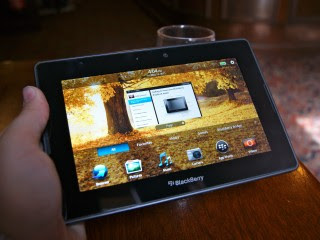
BlackBerry PlayBook Review


The tablet war is definitely hotting up now, and it isn’t just a case of choosing a tablet that looks nice. RIM, maker of the BlackBerry, is the latest company wanting a slice of Apple’s pie with its 7-inch screen pad, the PlayBook.

It’s a handsome piece of kit that looks great and feels good in the hand. It has a very wide bezel, but there’s a reason for that. The bezel is partly touch-sensitive, so you wake the screen, for example, by swiping your finger from one edge to another; there’s no Home button as there is on the iPad.

You can also wake it with the power button mounted on the top edge, but the swiping action is a lot more fun!

And you use the same swiping-from-the-bezel movement to switch from one app to another. One stroke from bottom to top shrinks the active window to a smaller image which sits alongside other active apps. This works well and if you were watching a video or playing a game when doing this, the powerful dual-core processor has no trouble continuing to play it in the reduced window until you flip to another program.

This is multi-tasking simply and effectively executed, courtesy of the new operating system RIM is using for its tablet. When you want to close a program or app, you simply flick it offscreen (a similar process used on HP’s upcoming TouchPad, with a lot of ideas taken from the former Palm webOS interface)

It’s a deeply satisfying way of controlling things. Stroke downwards from the top and a full menu drops down. Neat.

The screen is high-resolution and super-sharp, so games and video look very impressive and high-definition. However, it can be a little tricky to see the display (even on full brightness) in the great outdoors on one of the few days where we’re privileged enough to enjoy bright sunlight.

The BlackBerry Desktop software makes it easy to synchronise your music and video collection with your PlayBook, or at least it does if you’re a Windows user. Mac compatibility is coming later, but for now you can connect it by using a micro-USB cable and drag-and-drop content instead.

Next to the USB connector is a mini HDMI-out socket. With this you can mirror the content of the PlayBook on the big screen. This is great for playing your movies back, gaming and it’s equally useful for playing a presentation. After all, the PlayBook isn’t just about playing.

RIM is known mostly as a business company, so it’s no surprise there are strong enterprise capabilities alongside its multimedia skills. And as it’s also a BlackBerry, you would expect exceptionally tight security to play a part in the software design.

So concerned is RIM about ensuring sensitive business data contained in emails is not lost if a PlayBook is left on a plane, say, that it has developed a system called BlackBerry Bridge. This connects the tablet to your BlackBerry phone, via Bluetooth, and lets the PlayBook see and edit (and delete) the emails on your Blackberry. Break the connection and the data disappears from the tablet.

This means that to make the most of the PlayBook, for now, you need a BlackBerry phone as well. For those without one, RIM will release a native email client for the PlayBook in the next few months, along with BlackBerry Messenger, Contacts and Calendar apps that can run independently.

It’s also rather vital to point out that the PlayBook only has a Wi-Fi connection. There’s no SIM card slot, so you’ll either need to tether it with your BlackBerry, or carry another smartphone that can share data via Wi-Fi.

New Sony Ericssons spotted, meet the CK15i and the ST18i

A group of new Sony Ericsson phones surfaced online and though little is known about those, we have their shots all lined up. The two most interesting members of the group are the CK15i and the ST18i.

The CK15i looks to be the first Sony Ericsson non-smartphone, non-Android device of 2011. This small touchscreen handset will apparently support a 240x400 pixel display, run on SE's A200 platform and come complete with a slide-out hardware keyboard. The only other thing we know at this time is a possible name, the Sony Ericsson Txt Pro.

The other mysterious device spotted is the ST18i. Even less is known about this model and due to the fact it sports the 'Xperia' moniker, will as a result probably run some iteration of Android. In the photos above you can see it has an 'HD' camera on the back, a front-facing camera, loud speaker grill and judging by the size of the sim slot, is a little smaller than the Sony Ericsson X8 with the looks of the Xperia Mini, but it's hard to tell. We're sure more information will trickle out soon enough and we'll be there when it does.

Samsung Galaxy S and Galaxy Tab to get Gingerbread, officially


Samsung has just come up with an official statement on the Galaxy S and the Galaxy Tab Gingerbread updates. Both are getting some later this month and unlike previous rumors, this one's as official as it gets.

The Galaxy Ace, Galaxy Gio, Galaxy Mini and Galaxy Fit owners are going to rejoice as well, as Samsung are launching Gingerbread for these mid-rangers, too.

The Galaxy S Android 2.3 update has been anticipated since March and it's high-time for Samsung to release it. With this update Samsung promises better performance due to a lower CPU consumption rate and enhanced 3D graphics.

The Gingerbread update will first start rolling out in the UK and Nordic Countries from "mid-May", followed by the rest of Europe, North America, Asia and Africa. If the "mid-May" part is to be trusted, we should see the update in the next couple of days.